Slow work on old buildings
Five services, usually in this order. Each one can stand on its own, and most buildings need all five. It always starts with a survey.
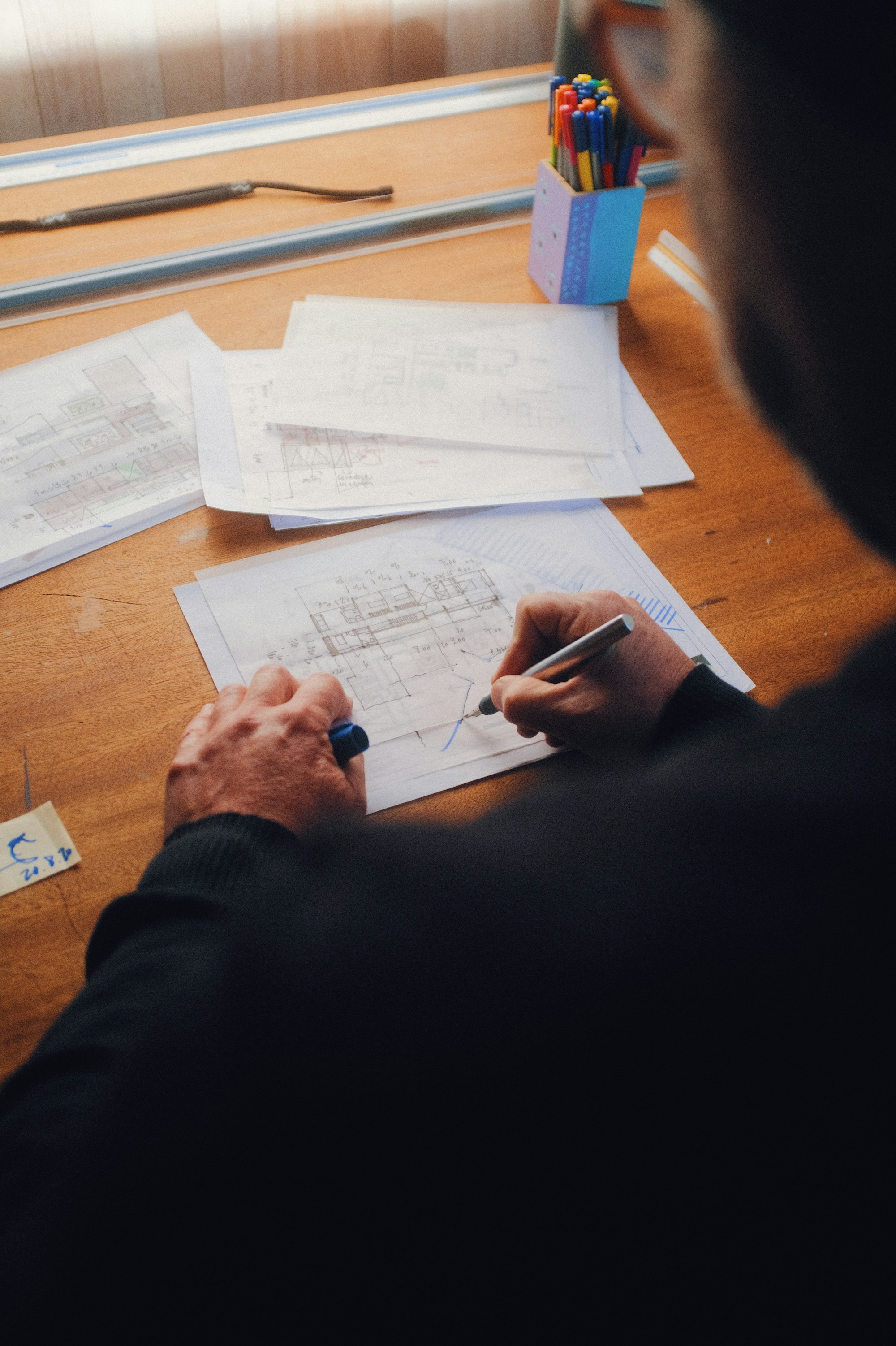
From first call to handover
Six stages, the same on every building. Timings are typical. Listed-building consent is the one we cannot hurry.
01
First call
A conversation about the building, what you want from it and what you can spend.
02
Site visit
Two of us walk the building with you and tell you honestly whether we are the right studio.
03
Survey
Measured drawings, photographs and a written history of the building. Yours to keep.
04
Consent
Drawings, a heritage statement and the conversations with the conservation officer.
05
Work on site
Repair first, then interiors, then furniture and light. One of us is on site every week.
06
Handover
A pack with every drawing, material and supplier, and a note on what to keep an eye on.

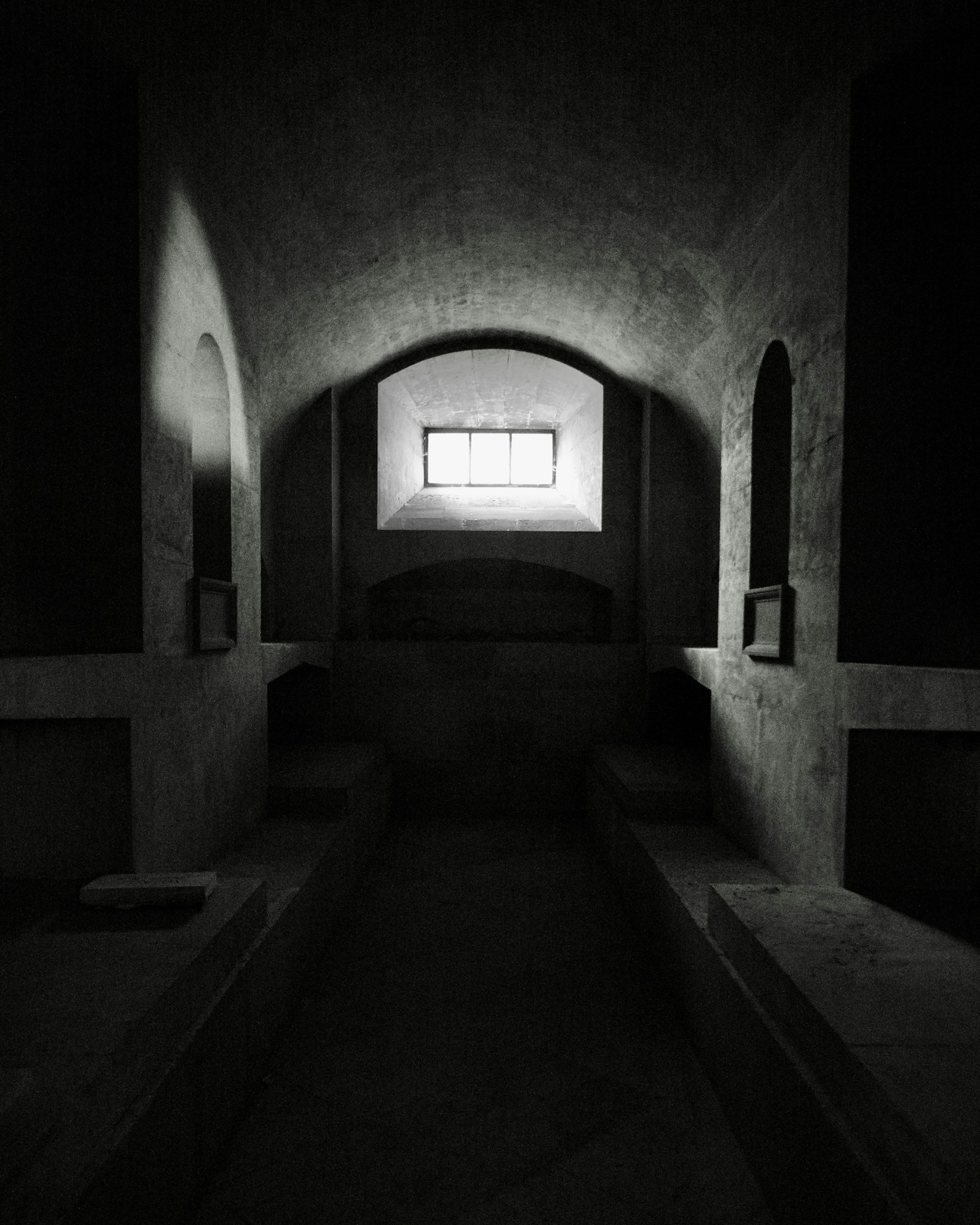

Repair before replace
We keep every piece of original fabric that can be kept. A repaired beam tells you more than a new one ever will.
Reversible by design
New work is pegged, screwed or freestanding. Anything we add can come out again without damaging what was there.
Materials from the place
Stone from the same bed, oak from the same county, lime slaked in our own yard. Old buildings know the difference.
Questions we get asked
If yours is not here, write to us. We answer every enquiry ourselves.
Do you only work on listed buildings?
Most of our buildings are listed, but not all. What matters is age and fabric. If it was built before 1900 and still has most of its original structure, we are interested.
How much does a survey cost?
A survey is priced by floor area and access. Most sit between £8,000 and £25,000. We quote a fixed fee after the first site visit.
Can you work with our own architect?
Yes. We often act as conservation architects alongside another practice, or take on the survey and repair while someone else designs the interiors.
Will we need to move out?
Usually, for some of the work. We plan the programme so you can move back into finished rooms as early as possible.
Where do you work?
Across England and Wales, with most projects within three hours of Ostrum Hall.